The S&P 500 is more than a benchmark for large-cap U.S. stocks. It is a living snapshot of how investors are pricing growth, inflation, interest rates, and the odds of a slowdown all at once. When the index trends higher, it usually reflects confidence that corporate earnings can keep pace with the economy. When it starts to wobble, traders often begin looking for stress points beneath the surface—slower revenue growth, tighter margins, weaker guidance, or signs that the economic cycle is maturing.
For investors trying to understand the next phase of the market, the important question is not simply whether the S&P 500 is up or down. It is whether the gains are being supported by broad participation, sustainable earnings growth, and an economic backdrop that can avoid recession. Those three factors often determine whether a rally has room to continue or whether the market is entering a more defensive phase.
S&P 500 Snapshot
The S&P 500 as a Barometer of the Business Cycle
The S&P 500 tends to anticipate the economy rather than follow it. That makes the index especially useful during periods when the market is trying to figure out where we are in the cycle. In early recovery periods, investors typically reward cyclical sectors such as financials, industrials, and consumer discretionary companies. Later in the cycle, leadership often becomes narrower, with growth stocks, defensive industries, or a small group of mega-cap names carrying more of the index.
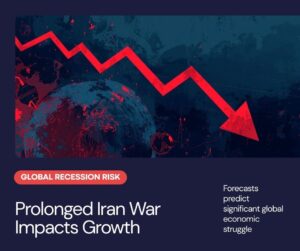
Growth and Recession Context
That shift matters because market leadership can reveal a great deal about confidence. A broad-based advance usually suggests that investors see healthy demand across the economy. A rally concentrated in just a few names can signal caution, even if the index itself looks strong on the surface. In other words, the S&P 500 can rise while the market underneath becomes less healthy.
Why Earnings Cycles Still Drive Long-Term Market Direction
At its core, the S&P 500 is an earnings machine. Index levels ultimately depend on whether companies can grow profits faster than the market expects. During an earnings expansion, analysts raise estimates, margins improve, and investors become willing to pay higher valuations. During an earnings slowdown, even strong companies can struggle if future profits come under pressure.
Current earnings cycles are especially important because they help answer a key question: is the market rally being justified by fundamentals, or is it being carried mostly by multiple expansion? When valuations rise faster than earnings, the market becomes more vulnerable to disappointment. When earnings estimates are steadily revised higher, the index can often absorb macro uncertainty more easily.
Investors should also watch guidance. Earnings reports are backward-looking, but management commentary often reveals whether demand is improving, stabilizing, or weakening. If companies across several sectors begin to cite softer consumer spending, slower enterprise demand, or more cautious capital expenditure plans, that can be an early warning that the broader market trend may be losing momentum.
Recession Indicators That Matter More Than Headlines
Recession fears tend to flare up quickly, but the most reliable indicators usually build gradually. For the S&P 500, several economic signals are worth monitoring because they influence both sentiment and earnings expectations. The yield curve is one of the most widely followed. When short-term rates remain above long-term rates for an extended period, investors often interpret that as a warning that growth may slow ahead.
Labor market data also plays a major role. A resilient jobs market can support consumer spending, while rising unemployment tends to pressure earnings across retail, travel, housing, and services. Consumer confidence, credit conditions, and small business surveys add further context. If households are pulling back and lenders are becoming more cautious, the market may start discounting weaker corporate results before they show up in reported numbers.
None of these indicators should be read in isolation. Recessions are usually confirmed only after the fact, but the S&P 500 often reacts earlier because investors are always looking forward. That is why a stable index level can mask rising economic risk—or, conversely, why a temporary market pullback does not always mean a recession is imminent.
What Market Breadth Reveals About the Health of the Rally
One of the most overlooked tools in S&P 500 analysis is market breadth. Breadth measures how many stocks are participating in the move, and it can separate a durable advance from a fragile one. If the index is making new highs but only a small number of stocks are leading, the rally may be vulnerable to rotation or profit-taking.
Healthy breadth often shows up when advancing issues outnumber declining issues, participation expands across sectors, and new highs are not limited to a handful of mega-cap stocks. This kind of setup suggests investors are becoming more confident about the earnings outlook across the market, not just for the largest names. Weak breadth, by contrast, can be an early sign that investors are becoming selective and defensive.
How Investors Can Read the Current Setup
For long-term investors, the S&P 500 should be viewed through a layered lens. The index itself offers a headline view of sentiment, but earnings trends and recession indicators provide the real substance. A constructive outlook usually includes improving profit estimates, stable macro data, and broad participation across sectors. A more cautious outlook often includes narrowing leadership, rising economic stress, and weakening guidance from companies that are closest to consumer or business demand.
That does not mean investors need to predict every economic turn. It does mean they should watch for changes in the relationships between price action, earnings, and macro data. When those signals align, the market often trends with greater confidence. When they diverge, volatility can increase quickly.
In the end, the S&P 500 remains one of the most useful tools for understanding the broader market trend because it captures both optimism and risk in one place. The index can be resilient even when headlines are noisy, but the combination of earnings cycles, recession indicators, and market breadth usually tells investors where the market is most likely headed next.